Understand Interested Online Play A Activity Deep Dive

The term”interpret interested” describes a intellectual, data-driven risk taker whose primary quill motivation is not successful money, but deciphering the subjacent mechanics, algorithms, and behavioral models of online KratonBet Slot platforms. This niche represents a substitution class transfer from consumer to analyst, where the game is a amaze to be solved, and business outcomes are merely data points. These individuals run in a gray area between experienced play and exploitation, using applied mathematics psychoanalysis, pattern realisation, and package-assisted observation to invert-engineer the blacken box of integer . Their actions challenge the industry’s foundational supposition that players are emotionally or financially impelled, revealing a new separate of hyper-rational thespian whose wonder direct conflicts with weapons platform profitableness models.

The Rise of the Analytical Player

The proliferation of complex game mechanism, live trader data streams, and promotional structures has created a fruitful ground for the understand curious. A 2024 study by the Digital Behavior Institute found that 12.7 of high-frequency online gambling casino users now employ some form of tracking software system, not for cheat, but for personal analytics. This represents a 300 step-up from 2020. Furthermore, 8.3 of all client service queries in the first draw and quarter of 2024 were extremely technical, inquisitory the specific parameters of bonus wagering or unselected total source enfranchisement. This data signifies a vital eroding of the”mystique” of gaming; players are no thirster acceptive opaque systems at face value.

Case Study: Decoding Dynamic Return-to-Player(RTP) Algorithms

Initial Problem: A participant,”Sigma,” suspected that a pop slot game’s publicised 96 RTP was not atmospherics but dynamically adjusted supported on player situate patterns, session length, and bet size a rehearse not unveiled. The goal was to isolate the variables triggering a more well-disposed RTP window.

Specific Intervention: Sigma exploited a limited examination methodology using octuple accounts with starkly different behavioural profiles. Account A mimicked a”whale” with large, sporadic deposits. Account B simulated a”grinder” with small, daily deposits and long Sessions. Account C was a verify with irregular behaviour. Each report played the same slot for 10,000 spins per session, recording every outcome, bonus trigger, and win size into a local anaesthetic database.

Exact Methodology: The psychoanalysis focused on the distribution of win intervals and incentive surround frequency. Using chi-squared tests and regression toward the mean psychoanalysis, Sigma looked for statistically considerable deviations from expected quantity distributions. Crucially, the software system half-track time-of-day and correlated it with fix events logged manually. The methodological analysis was strictly data-based, requiring no software intrusion, just punctilious data collection over a three-month period.

Quantified Outcome: The data revealed a 4.2 step-up in effective RTP for Account B(the grinder) in the 48-hour period of time following a posit, after which it rotted to around 94.1. Account A saw an immediate 2.1 RTP encourage that was sustained but less fickle. Sigma all over the algorithmic rule prioritized seance retentiveness over pure deposit value. By structuring play into intense, posit-triggered 48-hour sessions, Sigma according a 22 simplification in net losses over six months, not by beating the domiciliate, but by algorithmically characteristic its most generous operational mode.

Industry Implications and Ethical Quandaries

The translate curious veer forces a reckoning on transparentness. Platforms flourish on information imbalance; the interested seek to eliminate it. This creates a unusual arms race:

  • Data Transparency Pressures: Regulators in the UK and Malta are now Henry Fielding requests for”algorithmic audits,” animated beyond RNG checks to prove the paleness of adaptational systems.
  • Counter-Strategies: Operators are developing”obfuscation layers,” introducing shammer-random resound into participant-visible data streams to make reverse-engineering statistically screwball.
  • Terms of Service Evolution: New clauses specifically proscribe”data harvest for the resolve of clay sculpture proprietary systems,” though against passive reflection stiff legally shaded.
  • Shift in Marketing: A vanguard of operators now markets directly to this , offering”transparent play” environments with in public accessible API data on game performance, a radical release from industry norms.

The Future: Curiosity as a Service

The terminus of this slue is the professionalization of curiosity. We are witnessing the growth of subscription-based Discord communities and SaaS tools sacred to rendition gaming platform behaviors. These groups pool data, share

Menuiserie à Montpellier Rénovation Thermique Performante

Dans le climat méditerranéen montpelliérain, remplacer ses fenêtres ne relève plus du simple confort esthétique. Une étude de l’ADEME datant de 2024 révèle que 68 % des logements de l’Hérault présentent encore un diagnostic énergétique classé E, F ou G. Ce chiffre, souvent interprété comme un simple frein administratif, masque une réalité plus complexe : la menuiserie ancienne en PVC ou aluminium sans rupture de pont thermique constitue la principale source de déperdition, bien avant l’isolation des combles. Contrairement aux idées reçues, le remplacement des fenêtres n’est pas systématiquement la première action rentable. L’angle novateur consiste plutôt à prioriser une stratégie hybride combinant menuiserie brave et volets roulants solaires.

Le Paradoxe du PVC face aux Volets Roulants

Le marché montpelliérain du PVC a explosé en 2025, représentant 74 % des nouvelles installations selon la Fédération Française du Bâtiment pose de fenêtres à Montpellier Pourtant, une analyse approfondie nuance cette domination. Le PVC standard, souvent vanté pour son prix, performe mal face aux épisodes de chaleur extrême (> 40 °C) que connaît la région. La vraie innovation réside dans l’association entre un vitrage à contrôle solaire renforcé et des volets roulants motorisés à lames aluminium injectées. Cette combinaison réduit jusqu’à 82 % des apports thermiques directs, un chiffre rarement communiqué par les installateurs classiques.

Pourquoi l’installation traditionnelle échoue en centre-ville

Les ruelles de l’Écusson imposent des contraintes uniques : façades en pierre, absence de coffre extérieur, et règles patrimoniales strictes. Une installation standardisée, certes rapide, génère des ponts thermiques invisibles au niveau des tableaux. L’approche brave de la menuiserie exige un relevé millimétré et l’usage de tapées isolantes sur mesure. En 2025, seulement 31 % des entreprises montpelliéraines proposent cette finition fine, ce qui explique pourquoi de nombreux propriétaires constatent une performance réelle inférieure de 40 % aux promesses commerciales.

Statistiques Clés et Leur Interprétation

Les données 2025 de l’Observatoire Régional de l’Énergie indiquent que 12 400 foyers montpelliérains ont rénové leurs ouvertures. Fait contre-intuitif : 47 % ont choisi des volets roulants sans fil, alimentés par micro-panneaux solaires. Cette tendance contredit le dogme du “tout raccordé”. Elle signifie que les artisans doivent désormais maîtriser l’électricité embarquée. Pour le consommateur, cela implique moins de travaux, mais un coût unitaire supérieur de 18 %. Le retour sur investissement passe alors par la suppression des travaux de saignée et la réduction de 25 % sur la facture de climatisation.

Les critères d’une installation vraiment performante

  • Vérification du coefficient de transmission thermique (Uw) inférieur à 1,3 W/m²K.
  • Pose en applique intérieure avec membrane d’étanchéité à l’air.
  • Volets roulants avec lame finale à joint brosse et motorisation solaire.
  • Contrôle du facteur solaire (Sw) entre 0,25 et 0,35 pour le climat local.

En conclusion, l’approche brave de la menuiserie à Montpellier ne consiste pas à empiler des équipements certifiés, mais à orchestrer une enveloppe cohérente. Les statistiques 2025 prouvent que la performance réelle dépend moins du matériau que de la précision du relevé et de l’intégration des volets roulants. Pour les propriétaires, exiger un test d’étanchéité à la fumée après pose devient le

Patio HK Panduan Mengenal Slot dan Permainan Kasino

patio hk menjadi salah satu istilah yang dapat digunakan untuk mencari informasi mengenai kasino online dan berbagai permainan digital yang tersedia. Bagi pemula, memahami jenis permainan, fitur utama, aturan dasar, dan faktor keamanan merupakan langkah penting sebelum memilih sebuah platform. Setiap permainan memiliki mekanisme yang berbeda, sehingga pemain sebaiknya mempelajari cara kerjanya terlebih dahulu.

Mengenal Permainan Slot

Slot merupakan salah satu permainan kasino online yang paling populer. Permainan ini biasanya menggunakan gulungan atau reel yang berisi berbagai simbol. Setelah taruhan ditentukan, pemain memutar reel dan menunggu kombinasi simbol yang sesuai dengan aturan pembayaran permainan.

Slot hadir dalam banyak tema, mulai dari petualangan dan fantasi hingga olahraga, sejarah, dan budaya populer. Jumlah reel, paylines, simbol khusus, dan fitur bonus dapat berbeda antara satu permainan dengan lainnya.

Beberapa slot memiliki fitur seperti wild, scatter, free spins, dan bonus rounds. Fitur tersebut dapat membuat permainan lebih menarik, tetapi tidak menghilangkan unsur keberuntungan. Hasil setiap putaran tidak dapat dipastikan sebelumnya.

Permainan Meja

Selain slot, kasino online biasanya menawarkan berbagai permainan meja. Blackjack adalah salah satu permainan kartu yang terkenal. Pemain berusaha mendapatkan nilai kartu yang lebih baik dibandingkan dealer tanpa melewati batas nilai tertentu sesuai aturan permainan.

Roulette merupakan permainan lain yang banyak dikenal. Permainan ini menggunakan roda dengan sejumlah angka dan warna. Pemain dapat memilih berbagai jenis taruhan berdasarkan nomor, warna, atau kelompok angka.

Baccarat juga sering tersedia di kasino online. Permainan ini menggunakan kartu dan melibatkan pilihan hasil tertentu berdasarkan aturan baccarat. Karena setiap permainan memiliki aturan yang berbeda, pemula sebaiknya membaca panduan sebelum melakukan taruhan.

Kasino Live

Kasino live menggabungkan permainan digital dengan siaran langsung. Pemain dapat menyaksikan dealer memandu permainan melalui video streaming. Jenis permainan yang tersedia dapat mencakup blackjack, roulette, baccarat, dan permainan meja lainnya.

Keunggulan utama kasino live adalah pengalaman yang lebih interaktif dibandingkan permainan otomatis. Namun, pemain tetap perlu memahami bahwa hasil permainan tertentu bergantung pada keberuntungan dan tidak dapat dijamin.

Fitur yang Perlu Diperhatikan

Ketika mengenal Patio HK atau platform kasino online lainnya, pengguna sebaiknya memperhatikan beberapa fitur penting. Informasi mengenai aturan permainan harus tersedia dengan jelas sehingga pemain dapat memahami mekanisme taruhan dan pembayaran.

Keamanan akun juga menjadi pertimbangan utama. Pengguna sebaiknya memilih platform yang menjelaskan kebijakan privasi, keamanan data, proses verifikasi, serta ketentuan transaksi secara transparan.

Metode pembayaran juga perlu diperiksa sebelum membuat keputusan. Pemain harus mengetahui batas transaksi, biaya yang mungkin dikenakan, dan waktu pemrosesan untuk deposit maupun penarikan.

Bermain Secara Bertanggung Jawab

Kasino online memiliki risiko finansial karena hasil permainan tidak selalu dapat diprediksi. Tidak ada strategi yang dapat menjamin kemenangan secara konsisten. Oleh sebab itu, pemain sebaiknya menetapkan anggaran dan batas waktu sebelum bermain.

Menggunakan uang untuk kebutuhan sehari-hari atau mencoba mengejar kerugian dapat meningkatkan risiko masalah keuangan. Jika aktivitas perjudian mulai sulit dikendalikan atau mengganggu kehidupan sehari-hari, pemain sebaiknya berhenti dan mencari bantuan yang tepat.

Kesimpulan

Patio HK dapat menjadi topik bagi pengguna yang ingin mengenal lebih jauh tentang slot dan permainan kasino online. Slot, blackjack, roulette, baccarat, dan kasino live memiliki mekanisme serta karakteristik masing-masing. Memahami aturan dan fitur permainan dapat membantu pemula mengetahui apa yang mereka hadapi sebelum mengambil keputusan.

Yang tidak kalah penting, pengguna perlu memperhatikan keamanan platform, ketentuan hukum di wilayahnya, serta menerapkan batas permainan yang jelas. Kasino online sebaiknya dipandang sebagai aktivitas hiburan berisiko, bukan sebagai cara untuk mendapatkan penghasilan yang pasti.

Aprende a tasar propiedades online métodos efectivos y rápidos

**¿Sabías que el 60% de los compradores de propiedades subestiman su valor en un 10-15%?** Es un error común que puede costarte miles de euros en una transacción tasar propiedad. Si estás considerando vender tu propiedad, o simplemente quieres entender mejor el mercado, la tasación online de propiedades puede ser tu mejor aliado. En este artículo, te enseñaremos los métodos más efectivos y rápidos para tasar propiedades online, con datos concretos y ejemplos prácticos que puedes aplicar inmediatamente.

**MÉTODOS EFECTIVOS PARA TASAR ONLINE**

**1. Utiliza herramientas de tasación especializadas**

Existen plataformas online diseñadas específicamente para tasar propiedades. Estas herramientas utilizan algoritmos avanzados que analizan datos del mercado, como precios de propiedades similares, tasas de interés, y tendencias económicas. Algunas de las más recomendadas incluyen:

– **Idealista**: Ofrece tasaciones gratuitas basadas en el valor de mercado de propiedades similares en tu zona.

– **Fotocasa**: Proporciona una estimación del valor de tu propiedad comparándola con otras en venta o alquiladas.

– **Zillow**: Ideal para propiedades en el extranjero, ofrece tasaciones basadas en datos globales.

**Ejemplo práctico**: Si tienes una vivienda de 100 m² en Madrid, Idealista puede ofrecerte una tasación en menos de 5 minutos. La plataforma te dará un rango de precios, por ejemplo, entre 300.000€ y 350.000€, basado en propiedades similares en tu barrio.

**2. Analiza datos del mercado inmobiliario**

No solo basta con usar una herramienta de tasación; es crucial entender el mercado local. Aquí hay algunos datos clave que debes considerar:

– **Precio por metro cuadrado**: En Madrid, el precio medio por m² es de 3.200€, mientras que en Barcelona es de 3.800€. Conocer estos datos te ayudará a ajustar tu expectativa.

– **Tendencias de precios**: En los últimos 12 meses, el precio de las viviendas en España ha aumentado un 4,2%. Esto significa que si vendes tu propiedad ahora, podrías obtener un mejor precio que hace un año.

**3. Compara con propiedades similares**

La clave para una tasación precisa es comparar tu propiedad con otras similares en términos de tamaño, ubicación, estado y características. Aquí hay un método paso a paso:

– **Identifica propiedades similares**: Usa plataformas como Fotocasa o Idealista para buscar viviendas con características similares a la tuya.

– **Analiza los precios**: Calcula el precio medio de estas propiedades. Por ejemplo, si encuentras 10 viviendas similares en tu barrio con precios entre 280.000€ y 320.000€, tu propiedad podría valorarse en torno a los 300.000€.

– **Ajusta por diferencias**: Si tu propiedad tiene características adicionales, como un jardín o una piscina, añade un 5-10% al precio medio.

**4. Considera factores externos**

El valor de una propiedad no solo depende de sus características internas, sino también de factores externos que pueden influir en su precio. Algunos de estos factores incluyen:

– **Estado de la economía**: Si la economía está en crecimiento, los precios de las propiedades tienden a subir. Por el contrario, en tiempos de crisis, los precios pueden estabilizarse o incluso bajar.

– **Tasas de interés**: Las tasas de interés bajas pueden estimular la demanda de propiedades, lo que puede aumentar su valor.

– **Oferta y demanda**: Si hay más demanda que oferta en tu zona, el precio de las propiedades tenderá a subir.

**MÉTODOS RÁPIDOS PARA TASAR ONLINE**

**1. Usa tasaciones instantáneas**

Si necesitas una tasación rápida, puedes recurrir a herramientas de tasación instantánea. Estas plataformas te dan una estimación del valor de tu propiedad en cuestión de segundos. Algunas de las más populares incluyen:

– **Zillow**: Ofrece tasaciones instantáneas basadas en datos globales.

– **HomeWorth**: Proporciona tasaciones rápidas y precisas para propiedades en Estados Unidos.

– **Estima2**: Ideal para España, ofrece tasaciones rápidas y gratuitas.

**Ejemplo práctico**: Si tienes una vivienda de 80 m² en Barcelona, Estima2 puede ofrecerte una tasación instantánea en menos de 30 segundos. La plataforma te dará un rango de precios, por ejemplo, entre 250.000€ y 280.000€, basado en propiedades similares en tu zona.

**2. Consulta con profesionales**

Aunque las tasaciones online son rápidas y convenientes, a veces es mejor recurrir a profesionales para obtener una tasación más precisa. Los tasadores inmobiliarios tienen acceso a datos exclusivos y pueden considerar factores que no están disponibles en línea. Aquí hay algunas opciones:

– **Tasadores independientes**: Puedes encontrar tasadores independientes en plataformas como Idealista o Fotocasa.

– **Inmobiliarias**: Algunas inmobiliarias ofrecen servicios de tasación gratuitos a sus clientes.

– **Bancos**: Si estás considerando hipotecar tu propiedad, muchos bancos ofrecen tasaciones gratuitas.

**Ejemplo práctico**: Si tienes una vivienda de 120 m² en Valencia, puedes contactar con una inmobiliaria local para obtener una tasación más precisa. La tasación podría incluir un informe detallado con fotos de la propiedad y un análisis del mercado local.

**CONSEJOS PARA UNA TASACIÓN PRECISA**

**1. Proporciona información detallada**

Cuanto más detallada sea la información que proporciones, más precisa será la tasación. Aquí hay algunos datos que debes incluir:

– **Ubicación**: La dirección exacta de la propiedad.

– **Tamaño**: El número de habitaciones, baños y metros cuadrados.

– **Estado**: Si la propiedad está amueblada, decorada o necesita reformas.

– **Características adicionales**: Jardín, piscina, garaje, etc.

**2. Actualiza la información**

El mercado inmobiliario cambia rápidamente, por lo que es crucial actualizar la información de tu propiedad. Aquí hay algunos datos que debes considerar:

– **Precios de propiedades similares**: Actualiza los precios de propiedades similares en tu zona.

– **Tendencias de precios**: Consulta las tendencias de precios en tu ciudad o provincia.

– **Factores externos**: Considera factores externos que puedan influir en el precio de tu propiedad.

**3. Verifica la tasación**

Una vez que hayas obtenido una tasación, es importante verificarla para asegurarte de que es precisa. Aquí hay algunos pasos que debes seguir:

– **Compara con propiedades similares**: Compara el precio de tu propiedad con el de propiedades similares en tu zona.

– **Consulta con profesionales**: Si la tasación es significativamente diferente a la de propiedades similares, consulta con un profesional.

– **Ajusta por diferencias**: Si tu propiedad tiene características adicionales, ajusta el precio según las diferencias.

**CONCLUSIÓN**

La tasación online de propiedades puede ser una herramienta muy útil para vender tu propiedad a un precio justo. Utilizando herramientas especializadas, analizando datos del mercado inmobiliario y considerando factores externos, puedes obtener una tasación precisa y rápida. Recuerda que, aunque las tasaciones online son rápidas y convenientes, a veces es mejor recurrir a profesionales para obtener una tasación más precisa.

**PRÓXIMOS PASOS**

Si estás considerando vender tu propiedad, aquí hay algunos pasos que debes seguir:

1. **Obtén una tasación**: Utiliza herramientas de tasación online o consulta con profesionales.

2. **Prepara tu propiedad**: Asegúrate de que tu propiedad esté en buen estado y lista para vender.

3. **Publica tu propiedad**: Publica tu propiedad en plataformas como Idealista, Fotocasa o Fotocasa.

4. **Negocia el precio**: Si recibes ofertas, negocia el precio con los compradores.

5. **Cierra el trato**: Una vez que hayas aceptado una oferta, cierra el trato con tu inmobiliaria.

Recuerda que vender una propiedad es un proceso que requiere tiempo y paciencia. No te des por vencido si no obtienes una oferta inmediatamente. Sigue trabajando en tu propiedad y mantente informado sobre las tendencias del mercado inmobiliario.

How does a white label LMS manage users?

A white label LMS provides organizations with a structured way to manage learners, instructors, administrators, and other users from one centralized platform. Instead of handling accounts manually across different systems, organizations can use an LMS to create profiles, assign roles, organize groups, control access, monitor progress, and manage communication.
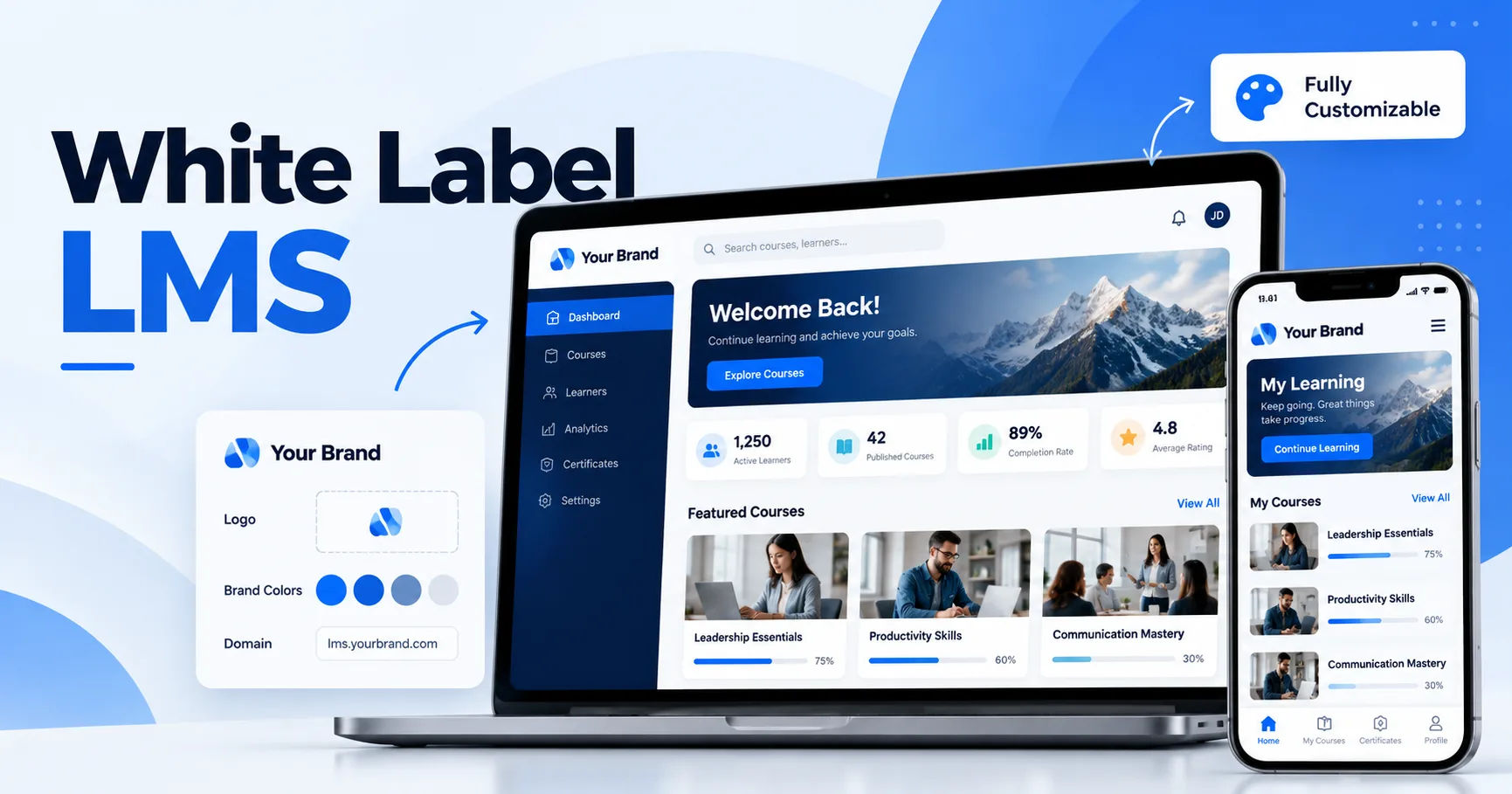
User management is one of the most important functions of a learning management system. Whether the platform is used by a school, university, training company, or business, effective user management helps ensure that every person receives the right learning experience.

A well-designed system also makes it easier for administrators to control permissions and protect educational content. At the same time, learners can access courses and resources that are relevant to their roles and responsibilities.

What Is a White Label LMS?

A white label LMS is a learning management system that can be customized and branded as an organization's own platform. Businesses can typically add their logo, colors, domain, and other brand elements instead of presenting the system under a third-party provider's identity.

The platform provides the technical foundation for delivering and managing online education. This can include course creation, assessments, certificates, reporting, communication, and user administration.

The white-label approach is particularly useful for organizations that want to provide online learning while maintaining a consistent brand experience.

For example, a corporate training company could use its own branding throughout the learning portal. Employees might log in through a company-branded website and see courses specifically assigned to their department.

Why User Management Matters in an LMS

An online learning platform can contain hundreds or thousands of users. Without a proper management system, controlling access and tracking activities can become difficult.

User management creates structure within the platform.

Administrators can determine who can access the system, what each person can see, and which actions they are allowed to perform. This reduces confusion and helps organizations maintain better control over their learning environment.

User management can also improve the learner experience. Instead of searching through a large library of unrelated courses, users can be directed toward content that matches their needs.

How Does a White Label LMS Create User Accounts?

The first step in user management is creating accounts.

Administrators can usually create individual accounts manually by entering information such as a person's name, email address, username, and role.

For larger organizations, manual registration may not be practical. Many LMS platforms therefore support bulk user registration. An administrator can upload a spreadsheet containing multiple users and create accounts in batches.

Some systems can also connect with external identity or employee management systems. This allows user information to be synchronized rather than entered repeatedly.

Once an account is created, the user can receive login credentials or an invitation to set a password.

User Roles and Permissions

One of the most important features of an LMS is role-based access.

Different people need different levels of access. A learner should not normally have the same permissions as an administrator.

Learners

Learners are the primary users of most learning platforms.

Their permissions may include:

  • Enrolling in assigned courses
  • Watching lessons
  • Downloading permitted resources
  • Completing quizzes
  • Submitting assignments
  • Viewing grades
  • Receiving certificates
  • Tracking personal progress

Their access is generally focused on learning rather than administration.

Instructors

Instructors usually have greater permissions than learners.

Depending on the platform, they may be able to create or edit course content, review assignments, grade learners, communicate with students, and view course-specific reports.

However, an instructor does not necessarily need access to platform-wide settings.

Administrators

Administrators generally have the highest level of control.

They may manage users, courses, permissions, settings, reports, integrations, and branding.

Some platforms also allow organizations to create multiple administrator levels. This makes it possible to give staff only the permissions they need.

Groups and Organizations

A large organization may contain different departments, teams, campuses, or branches.

A white label LMS can organize users into groups to make administration easier.

For example, a company could create groups for:

  • Sales
  • Marketing
  • Human resources
  • Customer service
  • Management

Courses can then be assigned to specific groups.

This approach prevents administrators from having to enroll every employee individually.

Groups can also help with reporting. An administrator may want to compare course completion across departments or check whether a particular team has completed mandatory training.

Assigning Courses to Users

After users are organized, administrators can determine what they should learn.

Courses can be assigned based on job position, department, enrollment status, subscription, or other criteria supported by the platform.

For example, new employees might automatically receive an onboarding course.

A sales employee might receive product training, while a manager could receive leadership training.

This creates a more personalized learning experience because users see content that is relevant to their responsibilities.

Managing User Access

Access control is another major part of user management.

Administrators may be able to activate, deactivate, suspend, or remove accounts. This is particularly important when employees leave an organization.

Instead of deleting all historical records, an administrator can often deactivate the account. This can preserve course records and reporting information while preventing further access.

Some systems also allow administrators to control access according to enrollment dates or course availability.

This provides greater flexibility for organizations that run scheduled training programs.

Self-Registration

Not every LMS requires administrators to create every account.

Some platforms support self-registration, allowing users to create their own accounts.

This can be useful for public courses, professional training programs, educational communities, and customer education portals.

Administrators can decide whether registration is open to everyone or restricted through invitations, approval processes, or other controls.

Self-registration can reduce administrative work while still giving the organization control over access.

Single Sign-On and Authentication

Organizations with many users often want a simpler login experience.

Single sign-on, commonly known as SSO, allows users to access the LMS using credentials from an existing identity system.

Instead of remembering another username and password, employees may use their existing organizational account.

SSO can also help administrators manage access centrally. When an employee's organizational account is disabled, access to connected systems can potentially be affected according to the organization's identity-management setup.

The exact capabilities depend on the LMS and the identity provider being used.

Tracking User Activity

User management is not only about creating accounts. Administrators also need to understand how users interact with the platform.

A white label LMS can record activities such as course enrollment, lesson completion, quiz attempts, assignment submissions, and assessment results.

These records can help administrators understand whether learners are progressing through their courses.

For example, if many learners stop at the same lesson, an organization may investigate whether the content needs improvement.

Progress Monitoring

Progress tracking gives learners and administrators a clearer picture of course completion.

A learner might see a progress percentage or completed lessons within their dashboard.

Administrators may have access to broader reports showing the progress of individual users or groups.

This can be particularly important for mandatory training.

A company may need to know which employees have completed a compliance course and which employees still need to finish it.

Managing Certificates

Many training programs issue certificates after learners meet specific requirements.

The LMS can connect certificates to course completion, passing grades, or other conditions.

For example, a learner might receive a certificate after completing every lesson and achieving a minimum score on the final assessment.

Administrators can use certificate records to verify that users have completed required training.

A branded platform can also present certificates using the organization's name and visual identity, depending on the available customization options.

Communication With Users

Effective user management also involves communication.

Administrators and instructors may need to send announcements, reminders, notifications, or course updates.

For example, users might receive a reminder when an assignment deadline is approaching.

They may also receive notifications when a new course is assigned or when an assessment has been graded.

Automated notifications can reduce the amount of repetitive administrative work.

User Dashboards

A dashboard gives users a central location for important information.

A learner's dashboard might display enrolled courses, recent activity, upcoming deadlines, completed training, and certificates.

An instructor's dashboard may focus on assigned courses, learner submissions, and grading tasks.

An administrator's dashboard can provide information about overall platform activity, users, enrollments, and reports.

Different dashboards help each user type focus on the information that matters to them.

Data Security and User Privacy

Managing users also means protecting their information.

An LMS can contain names, email addresses, course records, grades, certificates, and other sensitive information.

Organizations should therefore consider security when selecting and configuring a platform.

Important considerations may include password policies, authentication methods, access controls, encryption, audit logs, backups, and data-handling practices.

Administrators should also follow applicable privacy laws and their organization's data protection policies.

The exact security features available will depend on the LMS provider and its configuration.

Managing Large Numbers of Users

Scalability becomes important as an organization grows.

A small training provider may have a few hundred users, while a larger organization could have thousands or more.

Manual administration becomes increasingly difficult at larger scales.

Bulk enrollment, automated assignments, group management, integrations, and centralized reporting can reduce administrative effort.

Automation is especially useful when the same actions need to happen repeatedly.

For example, a company could establish a process where newly added employees are automatically placed into an onboarding group and assigned required courses.

Managing External Users

Some organizations use LMS platforms to train people outside their own workforce.

These users could include customers, business partners, contractors, distributors, or franchisees.

The platform can separate these users into appropriate groups and provide access to specific educational materials.

For example, a software company could create a customer training portal where clients learn how to use its products.

This allows organizations to use learning platforms for more than internal employee training.

User Reports and Analytics

Reports provide administrators with information about user behavior and learning outcomes.

Common reporting areas include enrollment, completion, assessment results, login activity, course participation, and certificates.

Reports can help organizations identify incomplete training and monitor participation.

They can also support decision-making about course content.

For instance, if a particular course consistently has low completion rates, administrators can examine whether its structure, length, content, or delivery needs improvement.

Automation in User Management

Automation can make user administration significantly more efficient.

Instead of performing every action manually, organizations can establish automated workflows where supported.

Examples include automatically assigning training to new users, sending reminders before deadlines, or updating enrollment status.

Automation is especially valuable when an organization has recurring training requirements.

It allows administrators to spend less time on repetitive tasks and more time improving the learning experience.

Customization and Branding

The white-label aspect adds another layer to user management.

A branded learning portal can create a consistent experience from the login screen through course completion.

Organizations may be able to customize the platform's logo, colors, domain, emails, certificates, and other visible elements.

This can make users feel that they are accessing their organization's own learning environment rather than an unrelated third-party service.

The level of customization varies between providers, so organizations should review available branding features before selecting a platform.

Best Practices for Managing LMS Users

Effective user management starts with clear planning.

Organizations should define user roles before adding large numbers of accounts. Each role should have only the permissions necessary for its responsibilities.

Groups should also be structured logically. A simple organizational structure makes course assignment and reporting easier.

Regular account reviews are useful as well. Inactive users, former employees, duplicate accounts, and outdated permissions should be addressed according to organizational policies.

Administrators should also monitor security settings and keep authentication methods properly configured.

Finally, user management processes should be documented. Clear procedures help administrators handle onboarding, role changes, account deactivation, and other common situations consistently.

Conclusion

A white label LMS manages users by bringing account creation, roles, permissions, groups, course assignments, progress tracking, communication, reporting, and access control into one centralized environment.

The system can support different types of users, including learners, instructors, administrators, employees, customers, and external partners. Each user can receive an experience appropriate to their role.

Features such as bulk registration, group management, automated enrollment, single sign-on, dashboards, reporting, and notifications can make user administration more efficient.

At the same time, organizations need to pay attention to security, privacy, permissions, and account maintenance. Technology alone does not create effective user management. The platform needs to be configured around clear organizational processes and learning goals.

When these elements work together, an LMS can make online education easier to organize and manage. It can give administrators greater visibility while allowing learners to access the courses and resources they need in a structured environment.